A selection campaign is a measurement, not just a ranking.
Models trained on existing sequence and structure data can propose plausible molecules. Metric generates direct evidence from the exact target, construct, and conditions of a program, then models how the experiment shaped the observations.
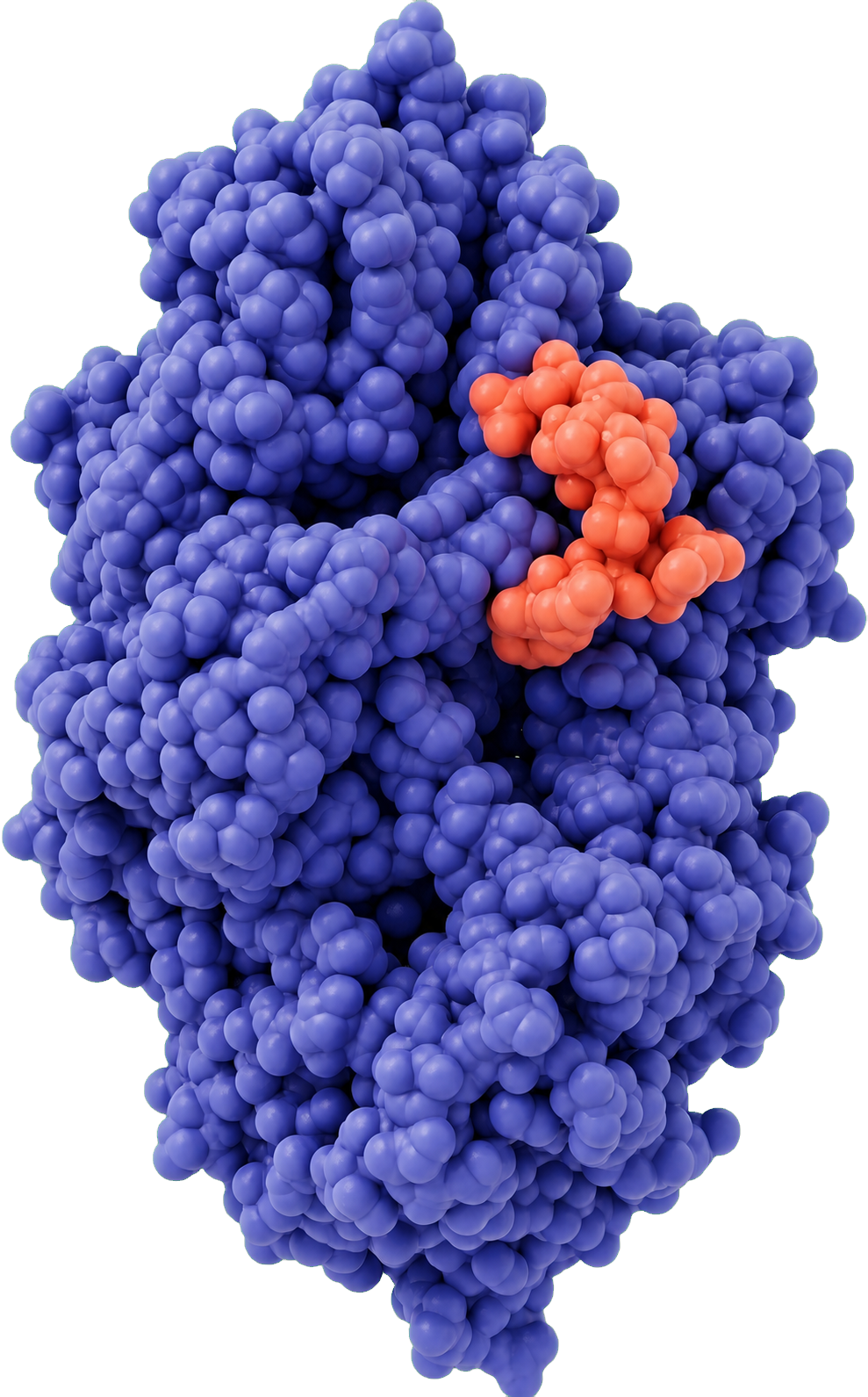
A binding specification is an energy landscape, not a structure.
Structure prediction gives you geometry. Geometry can tell you what might bind. It cannot tell you whether a molecule has the affinity, selectivity, and conditional behavior the program requires.
The differences are small and consequential. At 298 K, 1–2 kcal/mol moves affinity by roughly 5–30×. That can separate a candidate from a dead end.
Metric infers those energies from the selection experiment. We model how binding, selection, and sequencing produced the observed counts, then infer the free-energy landscape that best explains them. The result is target-specific biophysical parameters with explicit uncertainty—not an enrichment score.
Structure tells you what can bind. Energy tells you what qualifies.
We separate molecular behavior from the experiment that measured it.
Molecular behavior
How sequence shapes the required interaction profile.
Experimental process
How the assay and sequencing process shape what is observed.
What the data can resolve
Which molecular effects are supported and where uncertainty remains.
Where the evidence ends
Which regions of sequence space are supported by the campaign.
Design is constrained by what the program has measured.
Every design traces back to evidence the campaign actually produced, not to prior assumptions alone.
By learning the interaction before individual validation, the platform is designed to reduce the number of builds and experimental cycles needed to reach a qualified candidate panel.